Status: done
Aim and motivation
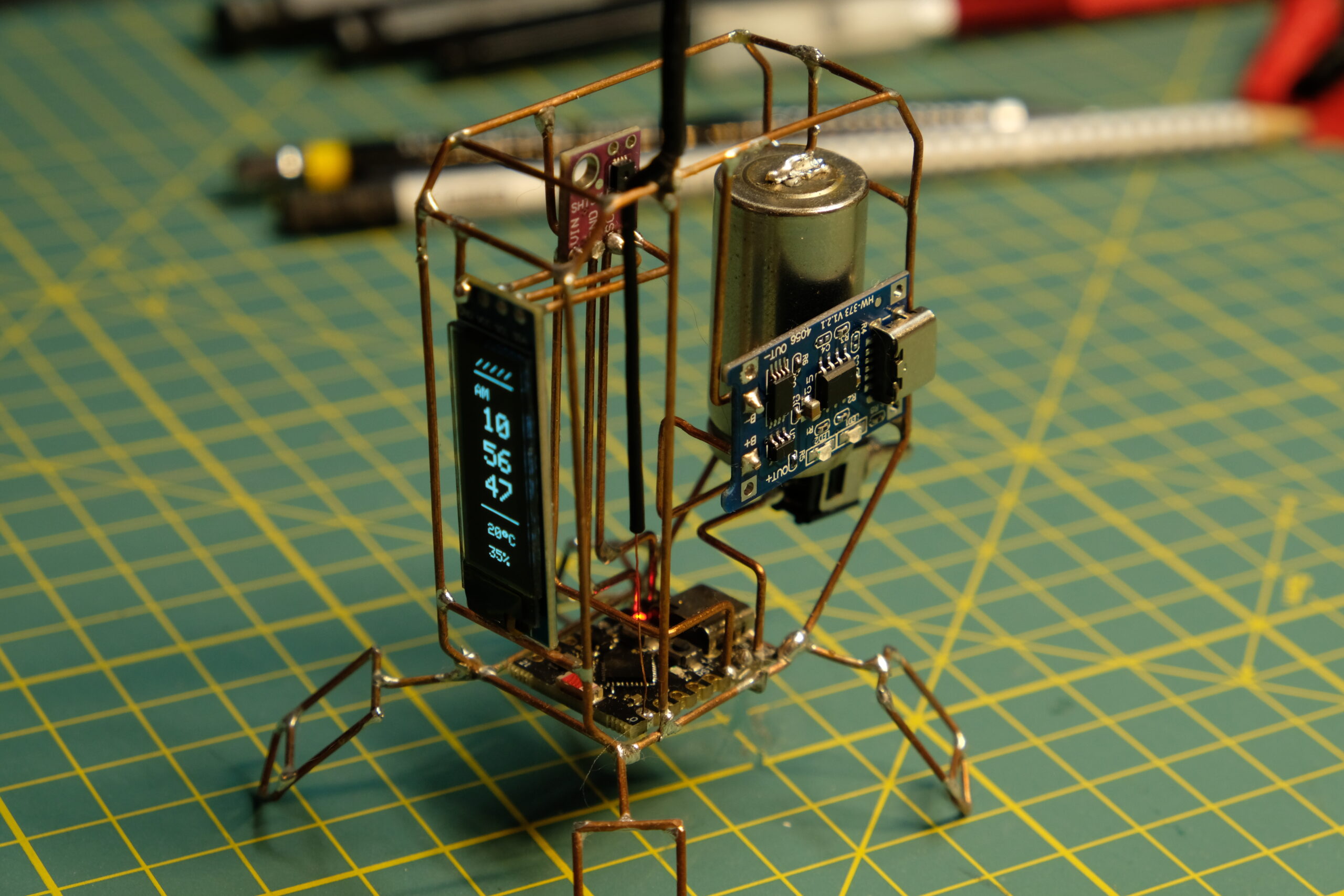
During my endless journey through the depths of the internet, I came across a YouTube channel from a guy who makes videos of him building little gadgets out of copper wire and electronic components (https://www.youtube.com/@huyvector).
One of his videos shows the process of building a weather station out of said materials. After being inspired by the video, I decided to get the soldering iron ready and build my own.
Materials and tools
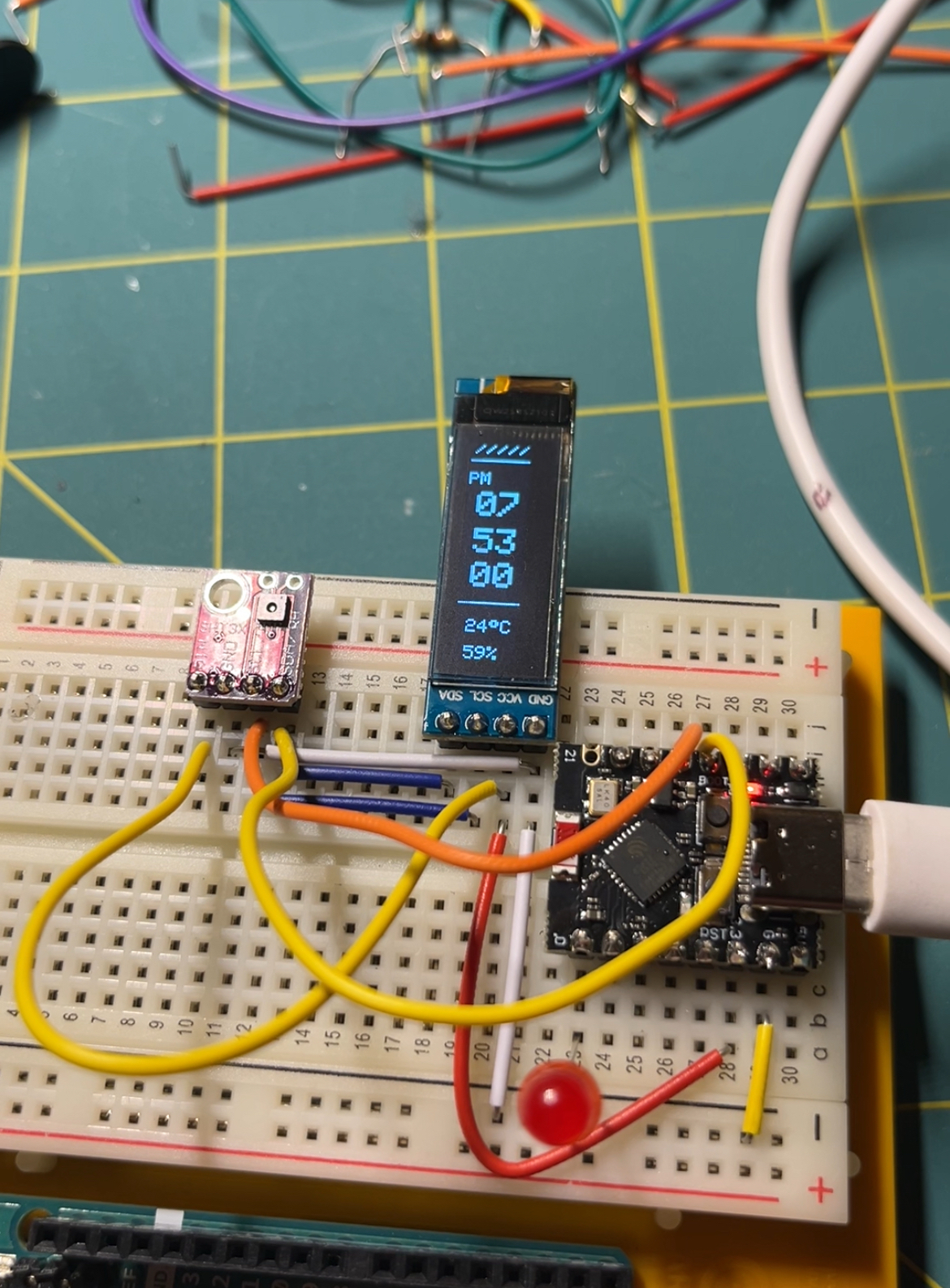
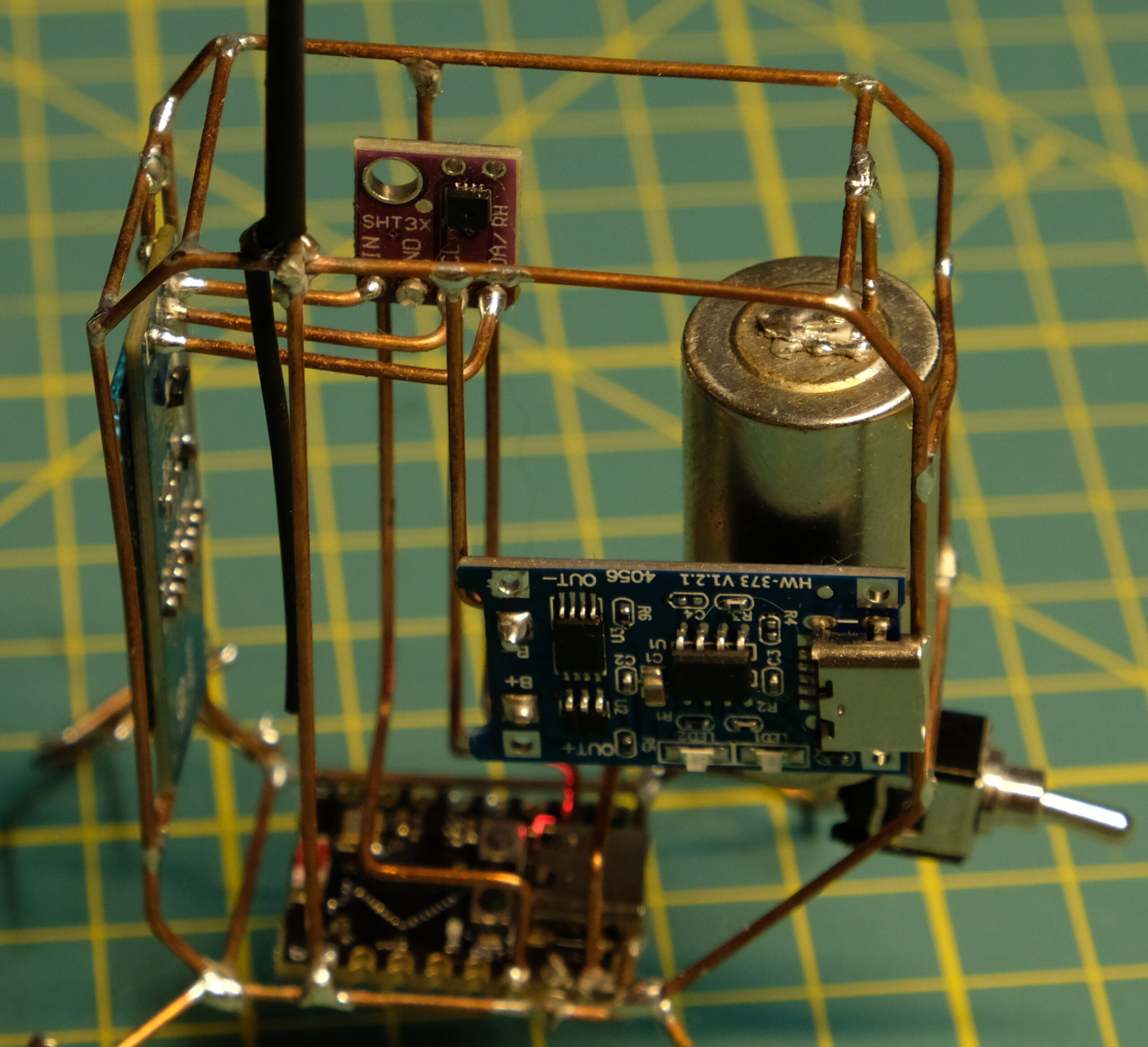
The circuit uses an OLED screen to display the temperature and humidity data recorded by an SHT-31D sensor. All this gets powered by a 14250 lithium ion battery and the processing gets done by an ESP32-C3 micro controller. For charging the battery he uses a small TP4056 charging module.
The ESP32 can connect to local WIFI, this is also how it gets the current time and date.
The humidity sensor and the screen are both connected to the ESP32 using the I2C serial databus, which is very common for components like this.
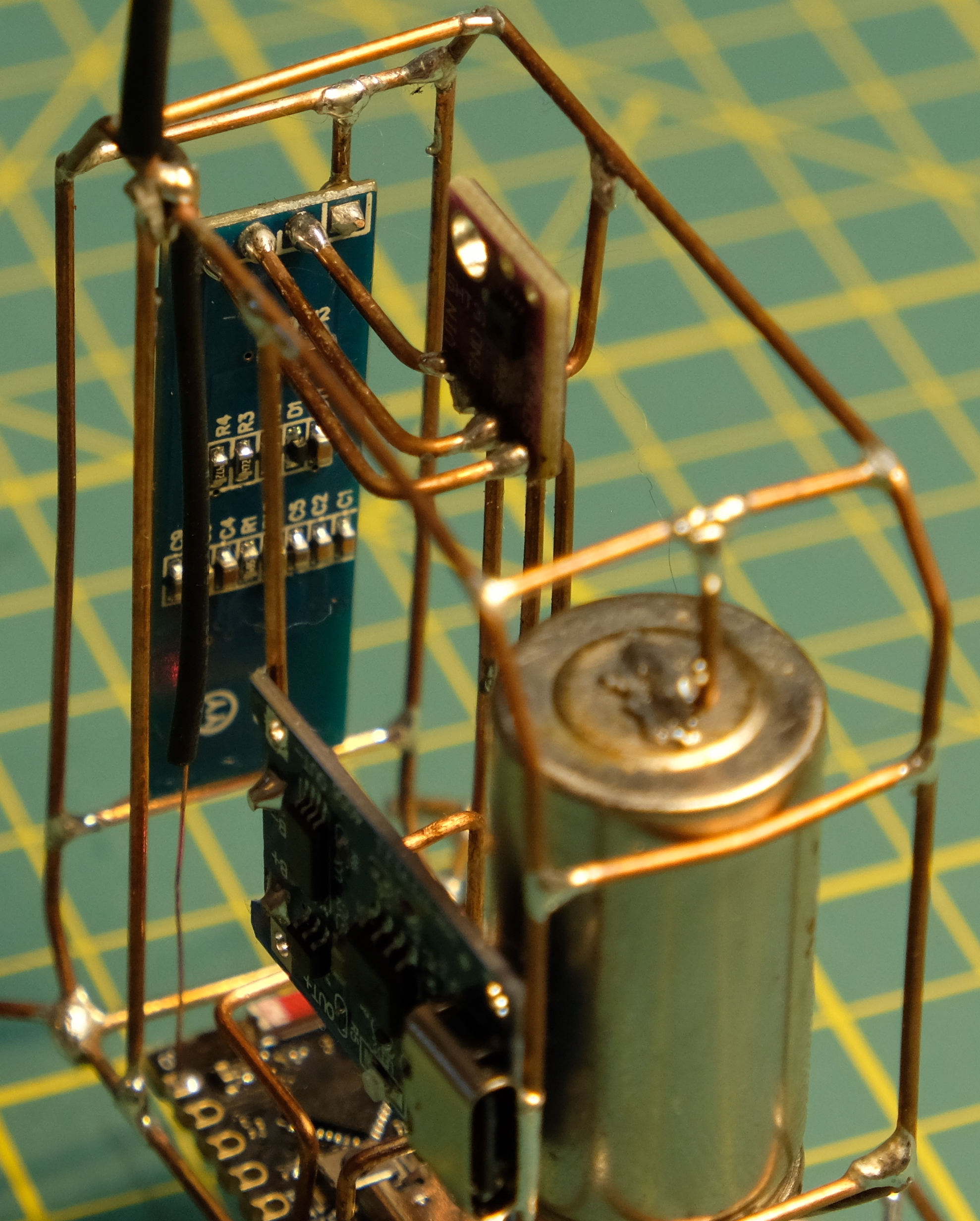
The circuit uses the copper frame as a common ground for all the electronic components, which is really smart and saves a lot of wiring. The same approach is by the way also used in cars and motorcycles. For getting the dimensions and the bending angles of the copper cables you have to get creative and use some basic geometry.
For soldering together the copper wires I recommend some flux, since this makes the whole job smoother and less messy.
Pitfalls and outlook
I would not recommend pulling the battery out of its protective plastic sleeve, since this could lead to you shorting it during the soldering process. This can get dangerous, since lithium ion batteries can provide a lot of current in a short time.
During soldering I accidentally connected the anode and cathode together with a piece of copper and it immediately turned the copper into a blazing hot piece of metal which burned my finger.
If you have access to a 3D printer, you could print a protective housing for the battery, and include it in the design.
The whole process was really satisfying and helped me get a better understanding of electronics and what makes them work.
I attached the circuit schematic in the downloads section.
Happy tinkering!